Impromptu Speech Topics: 200 Ideas and Practice Tips
200 impromptu speech topics plus PREP frameworks, 60-second timing, filler-word drills, interview and student prompts, and a daily one-minute practice routine.
Impromptu speaking feels scary because it removes your script.
Good.
That is the point.
Real life rarely gives you perfect prep time. Interviews. Meetings. Class discussions. Sales calls. Toasts. Hard questions. You need to think fast, structure faster, and speak with calm energy.
The fastest way to improve is simple: practice short answers every day.
Not once a month. Not only before a big event. Daily.
Use the impromptu speech topics below to build confidence, reduce filler words, and train your brain to turn messy thoughts into clear answers.
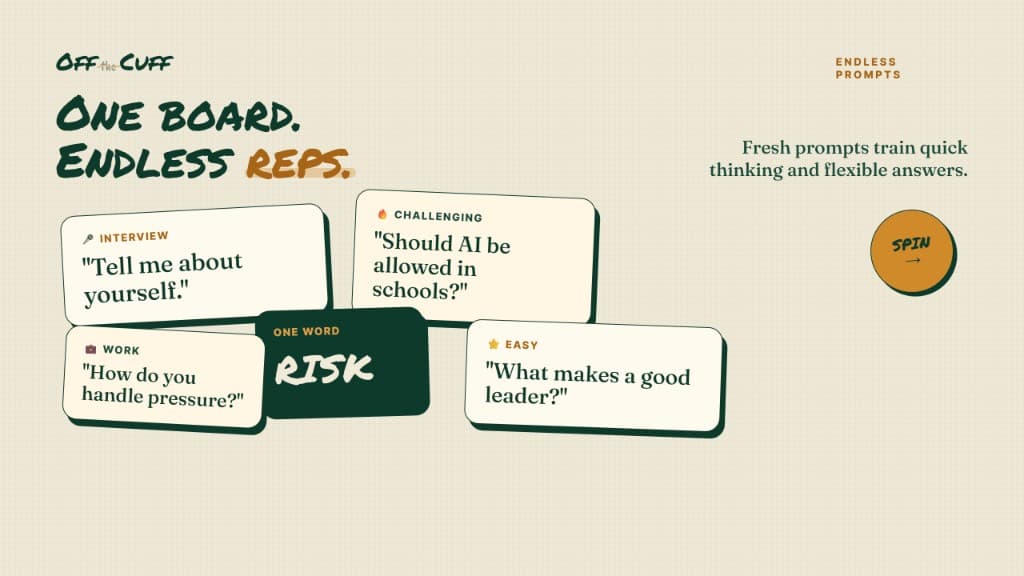
Use random prompts to build confidence one minute at a time.
What Is an Impromptu Speech?
An impromptu speech is an unprepared or lightly prepared talk delivered with little notice. You get a prompt. You think for a few seconds. Then you speak.
That can mean:
- A 30-second answer in an interview
- A one-minute response in class
- A quick update in a meeting
- A toast at dinner
- A debate response
- A video practice prompt
- A networking introduction
The goal is not perfection.
The goal is clarity under pressure.
A strong impromptu answer has three parts:
- A clear point
- A simple structure
- A clean finish
If you can do that in one minute, you can do it almost anywhere.
How to Use These Impromptu Speech Topics
Do not just read the list.
Use it.
Here is the simple practice method:
- Pick one topic at random.
- Set a timer for 60 seconds.
- Take 10 seconds to plan.
- Speak for one minute.
- Record yourself.
- Review one thing only.
- Repeat tomorrow.
Keep it low pressure. Practice privately. Record on your phone or with a speaking practice tool. You do not need an audience every time. You need reps.
Track one metric per session:
- Number of filler words
- Length of answer
- Eye contact with camera
- Number of pauses
- Whether you had a clear ending
- Whether your answer followed a structure
Small numbers make improvement visible. Visible progress builds confidence.
The Best Structure for Any Impromptu Speech
Most people ramble because they start before they know where they are going.
Use a framework.
Frameworks do not make you robotic. They make you calm.
The PREP Framework
PREP stands for Point, Reason, Example, Point.
Use it when you need a clean opinion.
Prompt: Should students have less homework?
Answer structure:
- Point: Yes, students should have less homework.
- Reason: Too much homework creates stress and reduces time for sleep, family, and hobbies.
- Example: A student who spends three hours on homework every night may perform well on paper but feel burned out.
- Point: Homework should exist, but it should be focused, useful, and limited.
PREP is excellent for interviews, debates, and classroom answers.
The Past, Present, Future Framework
Use this when the topic is about growth, change, or experience.
Prompt: Talk about learning from failure.
- Past: I used to avoid failure because it embarrassed me.
- Present: Now I see failure as feedback.
- Future: I want to keep taking smart risks and reviewing what each result teaches me.
This works well for personal stories and motivational topics.
The Problem, Action, Result Framework
Use this when you need to sound practical.
Prompt: How can teams communicate better?
- Problem: Teams often assume people know what is happening.
- Action: Set clearer expectations, write decisions down, and follow up quickly.
- Result: Fewer mistakes, faster work, and less stress.
This is powerful for workplace speaking.
The One, Two, Three Framework
When your brain freezes, count.
Prompt: What makes a good leader?
A good leader does three things. First, they listen. Second, they make decisions. Third, they take responsibility.
Simple. Strong. Easy to follow.
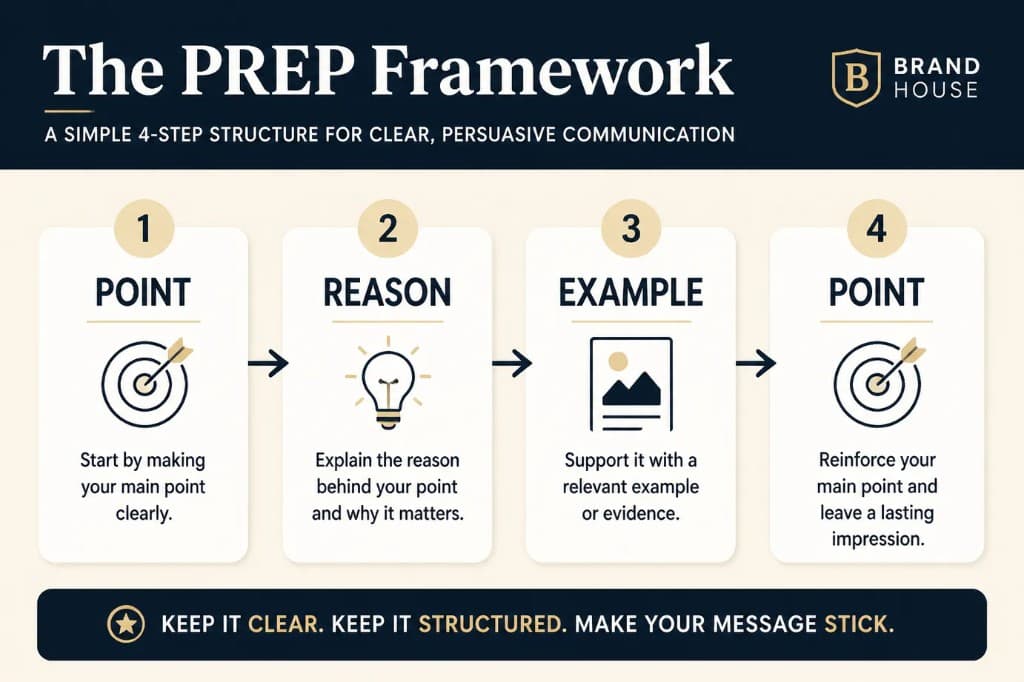
A simple framework helps you stay calm and clear.
Quick Warm-Up Before You Speak
Before you practice any topic, warm up for one minute.
Try this:
- Take one slow breath.
- Relax your jaw.
- Say the first sentence out loud before recording.
- Smile slightly.
- Start slower than feels natural.
Your first sentence matters. It sets the tone.
Use starters like:
- I believe the most important point is...
- The way I see it is simple...
- There are two sides to this topic...
- A good example from daily life is...
- If I had to answer quickly, I would say...
These phrases buy you time without sounding lost.
200 Impromptu Speech Topics to Practice
Use these prompts for class, clubs, interviews, team training, debate practice, or daily speaking drills.
Start with easy topics. Then move to harder ones.
Easy Impromptu Speech Topics
- Your favorite morning habit
- A food everyone should try
- The best way to spend a rainy day
- Why pets make life better
- A place you want to visit
- Your favorite season
- A skill you want to learn
- The best gift you ever received
- A movie that stayed with you
- Your favorite way to relax
- Why music matters
- A simple way to be healthier
- The best advice you have heard
- A book more people should read
- Your favorite childhood memory
- A hobby worth trying
- Why laughter is important
- The best meal of the day
- A small thing that makes you happy
- A person you admire
Funny Impromptu Speech Topics
- Why socks disappear in the laundry
- If animals could talk, which would be the rudest
- The worst superpower to have
- Why pizza should be a breakfast food
- How to survive a boring meeting
- The secret life of your backpack
- Why your phone knows too much
- If your pet ran for president
- The most dramatic thing about Mondays
- How to pretend you understand technology
- Why elevator silence is so awkward
- The best excuse for being late
- If coffee had a personality
- Why autocorrect ruins friendships
- The art of looking busy
- If your shoes could complain
- Why leftovers taste better at midnight
- The weirdest app idea ever
- How to win an argument with a cat
- Why naps deserve more respect
School and Classroom Topics
- Should school start later?
- Are grades the best way to measure learning?
- Should students wear uniforms?
- What makes a great teacher?
- Should homework be limited?
- Is group work helpful or frustrating?
- Should phones be allowed in class?
- What subject teaches the most life skills?
- Should students learn public speaking earlier?
- How can schools reduce stress?
- Should tests be open book?
- What makes a classroom feel safe?
- Should students choose more of their classes?
- Is online learning effective?
- Should schools teach financial skills?
- What is the value of art and music classes?
- Should attendance affect grades?
- How can students build confidence?
- What makes a good class discussion?
- Should schools focus more on practical skills?
Interview and Career Topics
- Tell me about yourself.
- Why should we hire you?
- What is your biggest strength?
- What is one weakness you are improving?
- Describe a time you solved a problem.
- Tell me about a time you failed.
- What does teamwork mean to you?
- How do you handle pressure?
- Why do you want this role?
- What motivates you?
- How do you handle feedback?
- Describe your ideal workplace.
- What does leadership mean to you?
- How do you manage your time?
- Tell me about a difficult decision.
- What are you learning right now?
- How do you stay organized?
- What makes communication effective?
- Where do you want to grow?
- What can you bring to a team?
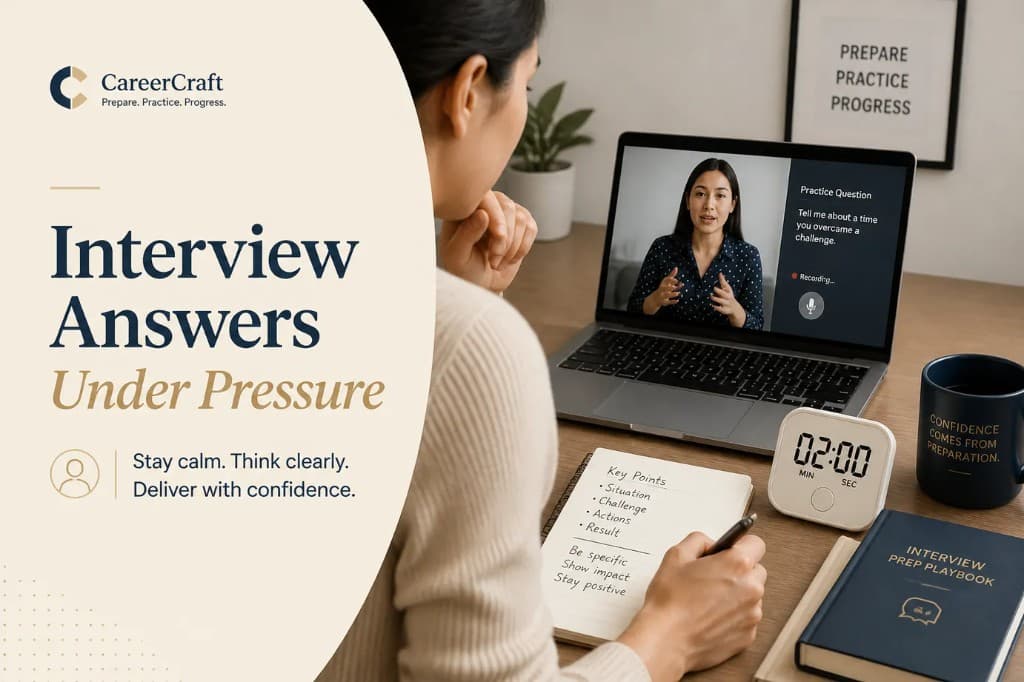
Interview answers get stronger when you practice structure before pressure.
Work and Leadership Topics
- What makes a meeting useful?
- How should leaders build trust?
- Why does clear communication matter?
- What makes feedback helpful?
- How can teams avoid confusion?
- Should companies offer remote work?
- What makes a strong company culture?
- How do you handle conflict at work?
- Why is accountability important?
- How can managers support growth?
- What makes a project successful?
- How should teams make decisions?
- Why do deadlines matter?
- What causes workplace stress?
- How can people speak up in meetings?
- What makes a good presentation?
- How should leaders respond to mistakes?
- Why is listening a leadership skill?
- How can teams stay motivated?
- What does professionalism mean?
Personal Growth Topics
- What does confidence mean to you?
- How do you build discipline?
- Why is consistency powerful?
- What habit has changed your life?
- How do you handle fear?
- Why is failure useful?
- What does success look like?
- How do you stay focused?
- Why is patience hard?
- What do you want to improve this year?
- How do you make better decisions?
- What does courage look like in daily life?
- Why is self-awareness important?
- How do you recover from setbacks?
- What drains your energy?
- What gives you energy?
- How can people become better listeners?
- Why do small habits matter?
- What does it mean to be reliable?
- How do you stop procrastinating?
Persuasive Impromptu Speech Topics
- Everyone should learn basic public speaking.
- Social media breaks our focus.
- Reading is still one of the best habits.
- People should walk more.
- Schools should teach confidence skills.
- Sleep should be treated as a performance tool.
- Fewer meetings would improve productivity.
- Everyone should record themselves speaking.
- Kindness is underrated.
- Public speaking should be practiced daily.
- People should ask better questions.
- Failure should be discussed more openly.
- Leaders should admit when they are wrong.
- Listening is more important than talking.
- Confidence comes from action, not waiting.
- One-minute practice can change your speaking.
- Teams should write down decisions.
- Students should present more often.
- Filler words can be reduced with awareness.
- Simple language is stronger than complex language.
Creative Impromptu Speech Topics
- If you could invent a holiday, what would it celebrate?
- Describe a city in the year 2100.
- If your future self sent a message, what would it say?
- Create a new rule for the internet.
- If you could redesign school, what would change?
- Imagine a world without clocks.
- Create a product that solves a tiny problem.
- If courage were an object, what would it be?
- Tell a story about a lost key.
- Explain happiness to an alien.
- If silence had a sound, what would it be?
- Design the perfect workspace.
- If your calendar could talk, what advice would it give?
- Describe a restaurant run by robots.
- Create a new sport.
- If confidence were a muscle, how would you train it?
- Tell a story that begins with a missed bus.
- Imagine phones disappeared for a week.
- Create a new tradition for your family.
- If your voice had a color, what would it be?
Debate-Style Topics
- Is technology making us smarter?
- Should voting be required?
- Is competition good for students?
- Should college be free?
- Are influencers good role models?
- Should people work four days a week?
- Is privacy more important than convenience?
- Should public transport be free?
- Are video games helpful or harmful?
- Should everyone learn a second language?
- Is artificial intelligence a threat or a tool?
- Should children have limited screen time?
- Is working from home better than office work?
- Should cities have more car-free zones?
- Is talent more important than hard work?
- Should people be allowed to make mistakes publicly?
- Are exams necessary?
- Should companies track employee productivity?
- Is cancel culture fair?
- Should we value speed or quality more?
Deep and Thoughtful Topics
- What does a meaningful life require?
- Can people truly change?
- What makes a friendship last?
- Is honesty always the best choice?
- What do people misunderstand about confidence?
- Why do we fear judgment?
- What does it mean to listen well?
- How do you define peace?
- What makes someone wise?
- Is comfort the enemy of growth?
- What should people do less often?
- What should people do more often?
- How does gratitude change behavior?
- What does it mean to be brave?
- Why is it hard to ask for help?
- What can silence teach us?
- How do people earn respect?
- What is worth practicing every day?
- How should we measure progress?
- What would you say if you had one minute to inspire someone?
How to Answer Any Impromptu Topic in 60 Seconds
A one-minute answer is enough.
You do not need five minutes to sound smart. You need a clear path.
Use this timing:
Seconds 0-10: Think
Do not panic.
Pick one angle. Not three. One.
Ask yourself:
- What is my main point?
- Which framework fits?
- What example can I use?
Seconds 10-20: Start Strong
Your opening should tell the listener where you are going.
Examples:
- I think the biggest reason is consistency.
- My answer is yes, but with one condition.
- I see this as a problem of communication.
- The best example is something most people experience daily.
Seconds 20-45: Add Support
Give a reason, example, or short story.
Be specific.
Weak: Communication is important.
Stronger: A team can have talented people, but if deadlines and decisions are unclear, the work still slows down.
Seconds 45-60: Land the Plane
Finish with a clean final sentence.
Do not drift.
Try:
- That is why I believe small habits create real confidence.
- In the end, the best answer is simple: practice before pressure.
- So my main point is this: clarity beats complexity.
A strong ending makes the whole answer feel stronger.
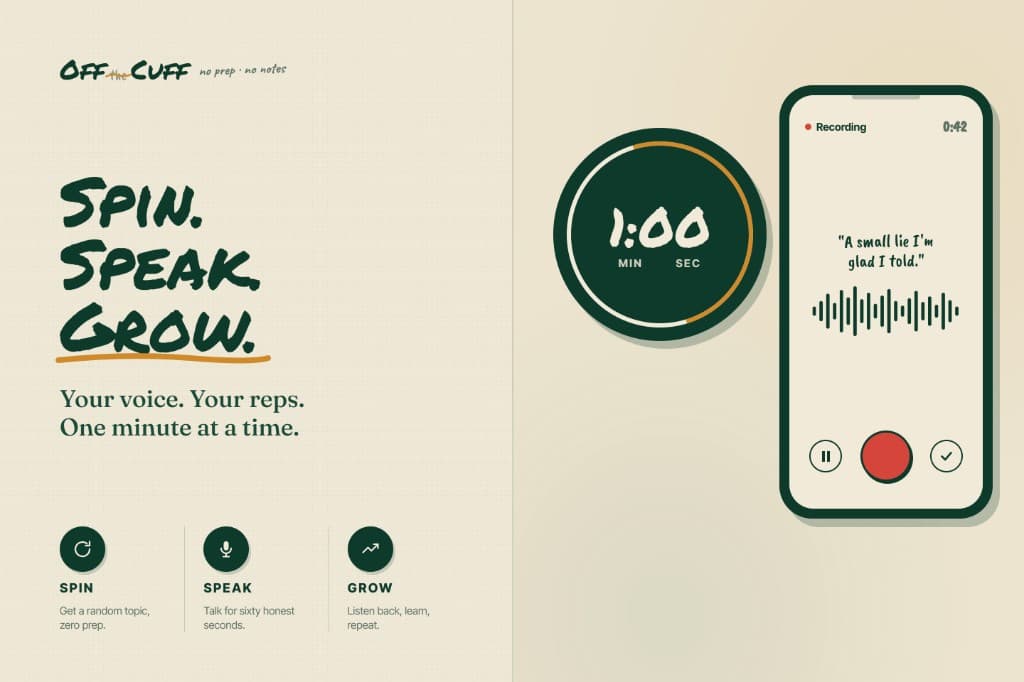
Sixty seconds is enough to train clear thinking and confident delivery.
How to Reduce Filler Words During Impromptu Speaking
Filler words happen when your mouth moves faster than your thoughts.
Common fillers include:
- Um
- Uh
- Like
- You know
- Basically
- Actually
- So
- I mean
Do not try to eliminate every filler word overnight. That creates more pressure.
Reduce them with awareness.
Step 1: Record One Answer
Pick a topic. Speak for one minute. Do not stop.
Step 2: Count Fillers
Listen once. Count only filler words.
Do not judge your voice. Do not rewrite your personality. Just count.
Step 3: Replace Fillers With Pauses
A pause feels long to you. It feels confident to listeners.
Practice this sentence:
My main point is... pause... confidence grows when we practice under low pressure.
Step 4: Repeat the Same Topic
Use the same prompt again.
Try to reduce your filler count by one.
That is a win.
One less filler word today. One clearer answer tomorrow.
Best Impromptu Speech Topics for Interview Practice
Interview answers are impromptu speeches with higher stakes.
Most candidates overtalk. They give too much background. They bury the point.
Practice these prompts often:
- Tell me about yourself.
- Why are you interested in this position?
- Describe a time you handled conflict.
- Tell me about a time you learned quickly.
- What is your biggest weakness?
- Why did you leave your last role?
- How do you handle feedback?
- What would you do in your first 30 days?
Use the Problem, Action, Result structure.
Prompt: Tell me about a time you handled conflict.
Answer: In a previous project, two teammates disagreed about priorities. The problem was that both were working from different assumptions. I asked each person to define the deadline, the goal, and the risk they were worried about. Once we wrote those down, the decision became easier. We adjusted the timeline and finished without more confusion. That taught me that conflict often improves when people slow down and clarify the real issue.
Clear. Specific. Calm.
That is what interviewers want.
Best Impromptu Speech Topics for Students
Students need impromptu practice because it builds more than speaking skill.
It builds thinking skill.
Start with familiar topics:
- Should school start later?
- What makes a good friend?
- Should phones be allowed in class?
- What is one habit every student needs?
- Should grades matter less?
Then move to opinion topics:
- Is failure necessary for success?
- Is technology helping students learn?
- Should students have more choice in school?
Then try abstract topics:
- What does courage mean?
- Is comfort dangerous?
- What makes a life meaningful?
The progression matters. Easy topics build fluency. Hard topics build depth.
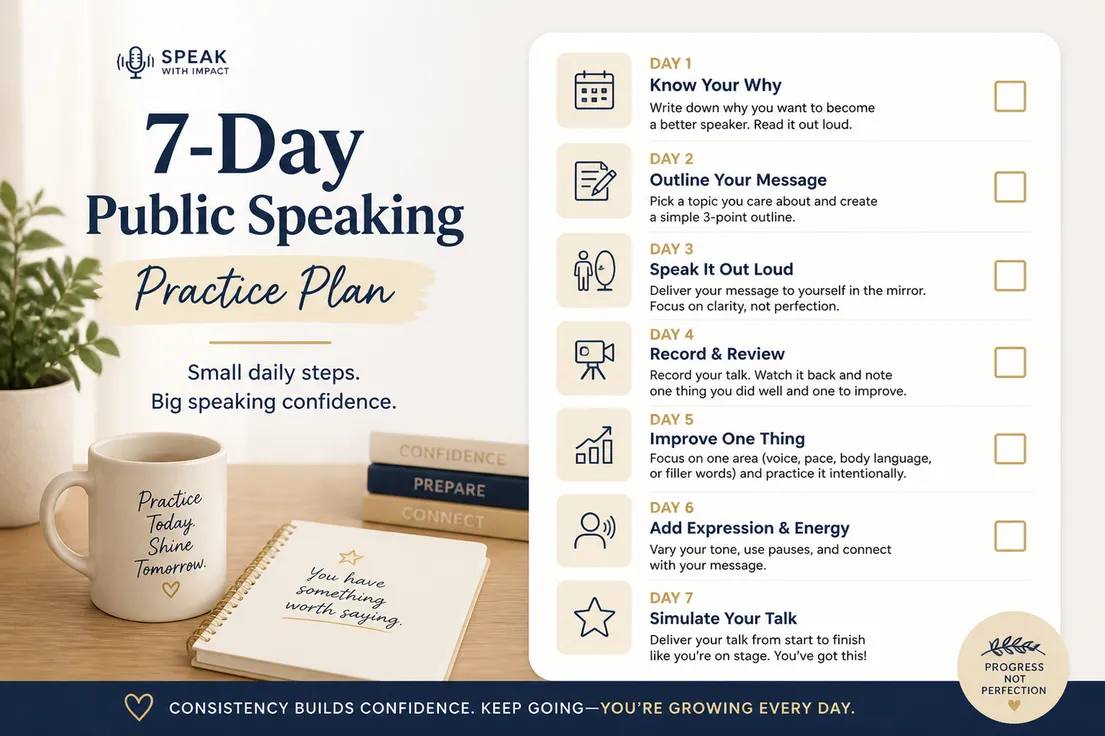
Students build fluency first, then depth.
Daily One-Minute Impromptu Speaking Routine
You can improve fast with a tiny daily routine.
Five minutes is enough.
Minute 1: Pick a Topic
Choose one prompt from the list. Random is best. It trains flexibility.
Minute 2: Plan Your Structure
Write three words only.
Example topic: What makes a good leader?
Three words: listen, decide, own.
Now you have a speech.
Minute 3: Record Your Answer
Speak for one minute. Keep going even if it feels messy.
Messy reps count.
Minute 4: Review One Metric
Pick one:
- Did I answer the question?
- Did I pause instead of using fillers?
- Did I finish clearly?
- Did I sound rushed?
- Did I give an example?
Only one metric. Too much feedback kills momentum.
Minute 5: Repeat or Save a Note
Say it again, or write one sentence:
Tomorrow I will pause more before my example.
That is enough.
Do this for 30 days and you will notice a difference.
Your words will come faster. Your answers will sound cleaner. Your confidence will feel earned.
How to Practice Privately Without Feeling Awkward
Many people avoid speaking practice because it feels embarrassing.
Practice privately.
Close the door. Use your phone. Keep the recording to yourself. Delete it if you want.
Privacy lowers the pressure. Lower pressure increases consistency. Consistency creates skill.
Try these low-pressure options:
- Record audio only.
- Record video but watch only the first 20 seconds.
- Practice while walking.
- Answer one prompt in the car.
- Use a timer and no camera.
- Practice with a trusted friend once a week.
You do not need to become a different person.
You need to become a more prepared version of yourself.
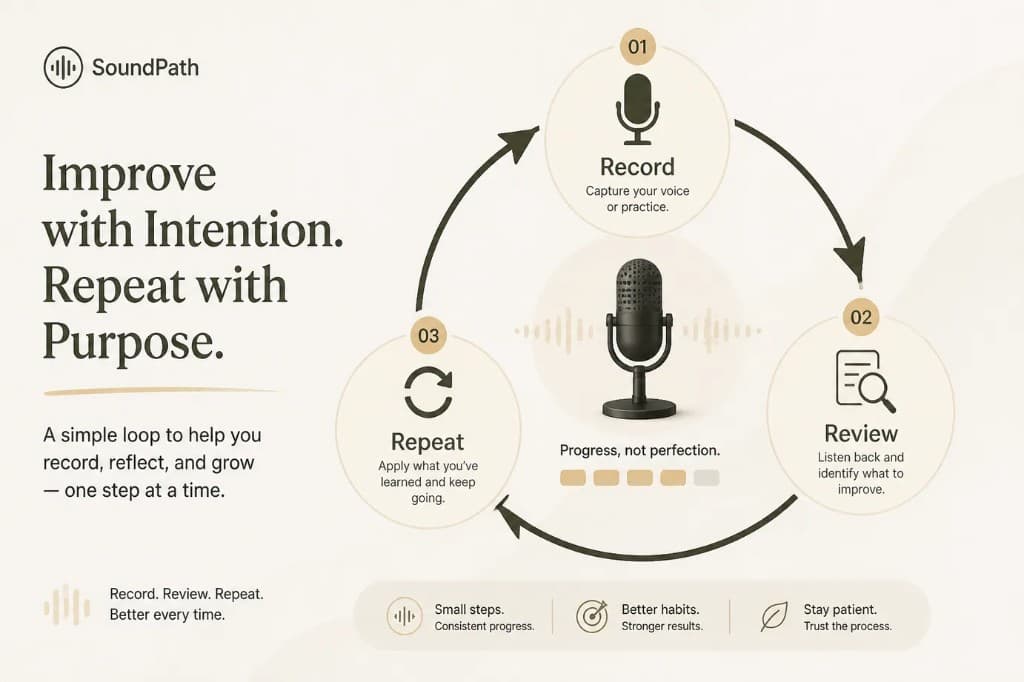
Private recording makes practice safer, easier, and more consistent.
Common Impromptu Speaking Mistakes
Avoid these traps.
Starting Without a Point
If you do not know your point, your listener will not know it either.
Take 10 seconds. Choose your message.
Trying to Say Everything
A one-minute answer cannot hold five ideas.
Pick one idea and support it well.
Speaking Too Fast
Speed feels like energy. Often, it sounds like nerves.
Slow down. Pause. Let the words land.
Apologizing Before You Start
Do not say you are bad at this.
Do not announce your nerves.
Start with the answer.
Ending Weakly
Avoid trailing off with phrases like that is it or yeah.
End with intention.
Say: That is why I believe daily practice is the simplest path to confidence.
Impromptu Speech Games and Drills
Practice should not always feel serious.
Use drills to build speed and flexibility.
The Random Object Drill
Pick any object near you. Speak for 30 seconds about why it matters.
A pen can become a speech about creativity. A water bottle can become a speech about health. A chair can become a speech about support.
This trains connection-making.
The Three Words Drill
Choose three random words. Build a one-minute speech that connects them.
Example: coffee, courage, deadline.
Answer idea: Coffee helps, but courage is what makes you face the deadline instead of avoiding it.
The Opposite Opinion Drill
Take a topic and argue the opposite of what you believe.
This builds mental flexibility.
The No Filler Challenge
Speak for 30 seconds. Each filler word means you restart.
Keep it playful. Not punishing.
The Strong Ending Drill
Practice only final sentences.
Prompt: Why does practice matter?
Endings:
- Practice turns fear into familiarity.
- You do not rise to confidence. You repeat your way into it.
- One minute today makes tomorrow easier.
Strong endings are a skill. Train them.
How to Choose the Right Topic Difficulty
Choose topics based on your current level.
Beginner
Use personal and easy topics.
Goal: speak for the full time.
Intermediate
Use opinion and workplace topics.
Goal: use structure and examples.
Advanced
Use abstract, debate, and surprise topics.
Goal: sound clear, concise, and calm under pressure.
If practice feels too easy, increase the difficulty.
If practice feels impossible, lower it.
The best practice is challenging but repeatable.
Final Tips to Speak Better Under Pressure
Here is the short version.
- Pause before you start.
- Pick one point.
- Use a simple framework.
- Give one example.
- End clearly.
- Record yourself.
- Review one metric.
- Repeat daily.
Confidence is not magic.
It is evidence.
Every recording gives you evidence that you can speak, adjust, and improve. Every one-minute rep makes the next answer easier.
Use these impromptu speech topics as your training ground.
Pick one today. Set the timer. Speak for one minute.
Then do it again tomorrow.
Ready to practice?
Spin a random topic, speak for 60 seconds, and listen back - free while we're in early access.